Robotics companies are drawing investor money because machines can take on repeatable work where labor is costly, scarce, or hard to find. The case is strongest when a robot performs one clear task and the buyer can measure the result.
- Investment cases start with a paid task, not a humanoid demo.
- Hardware sales are only one part of the business model.
- The main risk is proving that a pilot can run for months.
The task comes before the robot
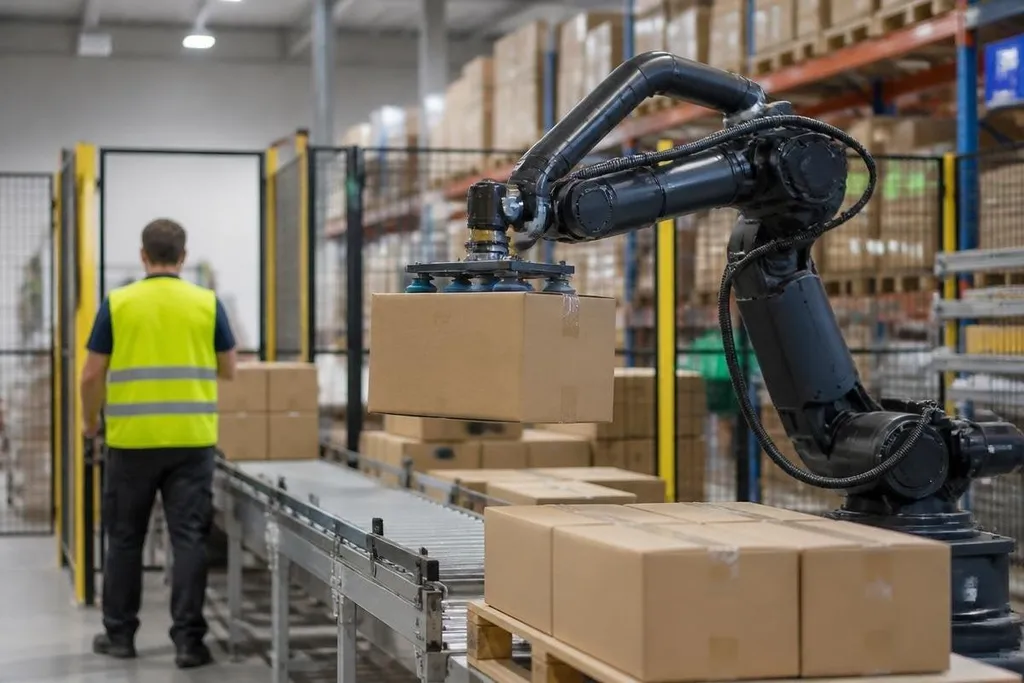
Investors look for a job with a clear price. Moving a box, checking a shelf, welding a joint, or sorting a parcel can be measured by time, error rate, and labor cost. That makes the business case easier to test than a broad promise about robots helping everywhere.
The buyer also needs a repeatable work area. A robot that handles one fixed route may work well in a warehouse, while the same system could struggle in a site with changing floors, poor lighting, or people crossing its path. The physical setting decides how much sensing and software the robot needs.
That detail affects funding. A company selling a robot for one narrow job can build, test, and support a known system. One promising a machine for many jobs must solve more problems before it can charge for regular use.
Labor cost is only one part of the case
A robot can reduce the number of people needed for a task, but that is not the full calculation.
The buyer may also need a site survey, new safety equipment, network access, staff training, spare parts, and a service contract.
Investors therefore need more than a unit price. They need evidence that the machine stays in service, that repairs are manageable, and that the customer can add more units without adding the same amount of support work.
The revenue model matters too. A company may sell the robot, charge for software, rent the equipment, or bill for completed work. Each model changes the cash needed to build the machines and the time required to earn it back.
Hardware makes the story harder
Robotics companies must pay for motors, batteries, sensors, control boards, assembly, testing, and field service before a customer pays in full. That creates a larger cash need than a software product with little physical stock.
The machine also has to work outside a lab. Dust, vibration, uneven surfaces, network loss, worn gripper pads, and small changes in the work area can turn a clean demo into a service visit. A strong investment case includes records from actual use, not only a short video.
A funding round says little about a robot until you can match it to a named machine, test site, and result. Robotics funding reporting from Robot24.com can put those details beside the investment claim, so you can judge whether new money supports working systems or another short demo before the next section asks what investors still need to prove.
What investors still need to prove
The open question is repeat use. A pilot can show that a robot completes a task once. It does not show how often the robot stops, how long repairs take, or how much human help remains necessary after the first week.
Investors also face a timing problem. A company may raise money before it has enough paid deployments to show steady revenue. That can fund better hardware, but it can also hide weak demand behind a growing order book or a list of pilot customers.
I’d be cautious with any robotics company that leads with a large market estimate but cannot name the task, buyer, price, and service record behind it.
A buyer’s check before the money moves
Use this short check when you read about a robotics funding round or review a company for investment:
- Name the task: What physical job does the robot perform, and how often does it repeat that job?
- Check the buyer: Is a customer paying for regular use, or is the system still in a trial?
- Count the people: How much human work remains for loading, supervision, recovery, and repair?
- Price the full system: Add installation, safety work, training, software, parts, and service.
- Ask for uptime: Look for months of operating records, not a single successful run.
- Test the margin: Confirm that each sale leaves money after hardware, support, warranty work, and shipping.
The strongest robotics investment cases will show a narrow job, a paying customer, repeat use, and a path to lower support cost. Until those details appear, the funding may be buying time to find a business rather than expanding one that already works.